What Animal Studies Reveal About Research Peptides
What Animal Studies Reveal About Research Peptides
Research peptides have become increasingly important in scientific laboratories worldwide. These short chains of amino acids serve as valuable tools for researchers studying various biological mechanisms and potential therapeutic applications.
Understanding Peptides in Research
Peptides are molecules consisting of two or more amino acids linked by peptide bonds. In research settings, synthetic peptides are created to mimic naturally occurring peptides or to explore novel compounds with specific properties.
Key Areas of Peptide Research
Metabolic Studies
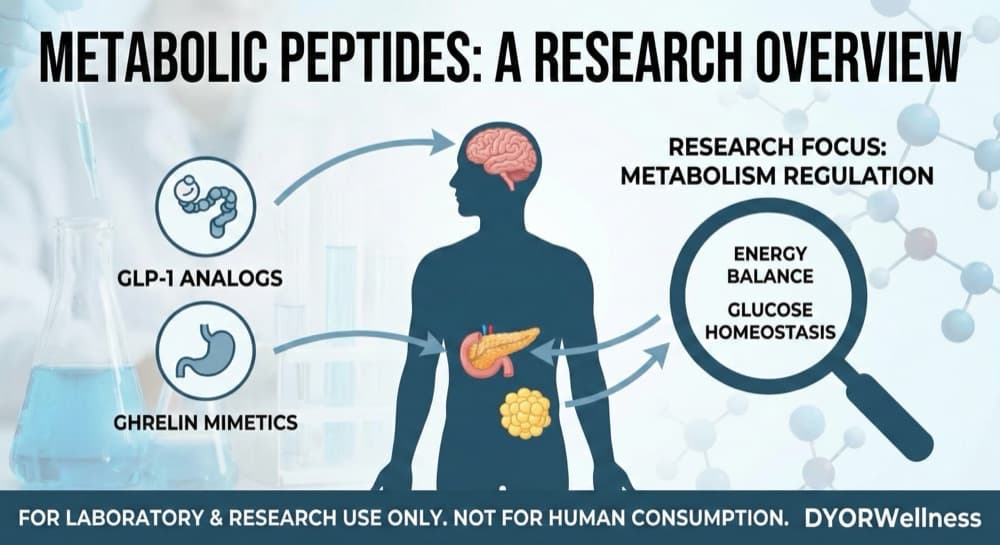
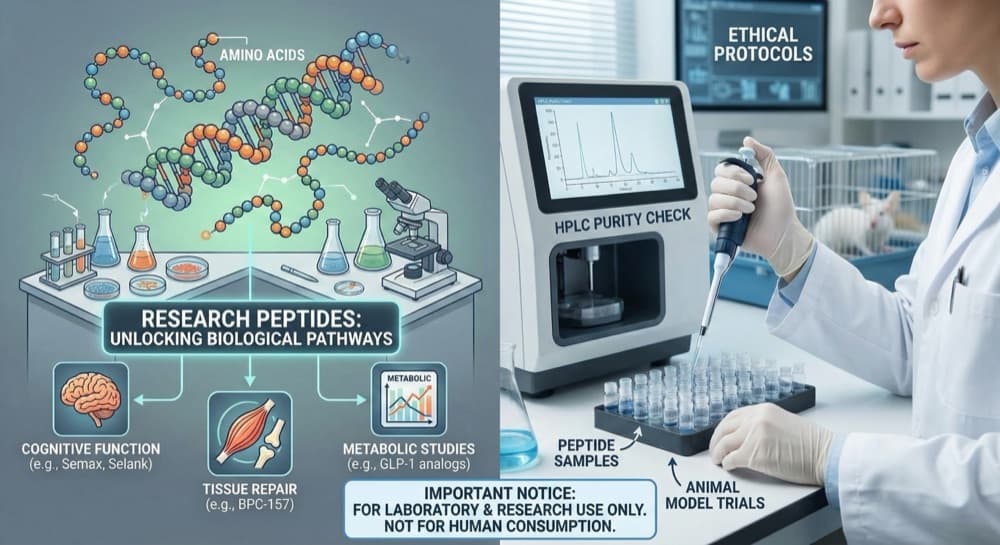
Animal studies have examined peptides that may influence metabolic pathways. Research on compounds like GLP-1 analogs has provided insights into glucose regulation and energy metabolism in laboratory settings.
Tissue Repair and Recovery
BPC-157, a peptide derived from gastric juice proteins, has been studied in animal models for its effects on tissue healing. Research has shown promising results in wound healing and connective tissue repair in controlled laboratory settings.
Cognitive Function
Nootropic peptides such as Semax and Selank have been investigated in animal models for their potential effects on cognitive function and neuroprotection. These studies have contributed to our understanding of peptide interactions with the central nervous system.
The Importance of Rigorous Research
All peptide research must adhere to strict scientific protocols and ethical guidelines. Animal studies provide valuable preliminary data, but results must be interpreted carefully and cannot be directly applied to human use without proper clinical trials.
Quality Control in Research
For research to be valid, the peptides used must meet strict purity standards. High-Performance Liquid Chromatography (HPLC) testing and Mass Spectrometry are standard methods for verifying peptide identity and purity.
Looking Forward
The field of peptide research continues to evolve, with new compounds being synthesized and studied regularly. As our understanding grows, so does the potential for these molecules to contribute to scientific knowledge.
Important Notice: Research peptides are intended for laboratory and research use only. They are not approved for human consumption or therapeutic use without proper regulatory approval.